Outside of a dog, a book is man's best friend. Inside a dog it's too dark to read.
Wednesday, September 03, 2014
Introducing Agatha Raisin, by M.C. Beaton
I picked this up because the name M.C. Beaton sounded familiar. This compendium of two mysteries was on the shelf in the breakfast room of the small hotel where I was staying in Paris. In short, cannot recommend.
Agatha Raisin is a pugnacious Londoner in her mid 50s with a Birmingham background of which she is ashamed. After a successful career in PR, she has sold her firm and bought a cottage in the Cotswolds for the life she has always imagined. Of course country life is a poor fit for a pushy city woman, and alleged hijinks occur as she uses her PR techniques to force her way into acceptance.
The set up is strong, the execution is very poor. Agatha is appallingly inconsistent in her characterization, pushy one moment, then weirdly shy and adolescent the next as the plot requires. Her two sidekicks in "The Quiche of Death" are offensive stereotypes: a (literally) screaming queen of a gay character who by the end of the book is looking for a suitably docile and stupid woman to marry, and an inscrutable but wise half-Chinese police officer who teaches Agatha about herself despite being a good thirty years younger than she is. Fortunately, these two characters are mostly abandoned by the second book, to be replaced by a handsome and single male neighbor who (predictably) runs from any threat of commitment and who Agatha pursues in un-funny ways. Thus Beaton hits a two-fer of mid-life cliches with one "comic" pairing.
The mysteries are not well constructed. In fact, in both cases, the actual murderer is the most obvious suspect and the only real mystery is why the police haven't solved the cases well before Agatha even realizes the deaths are suspicious.
The first mystery "The Quiche of Death" centers around a village competition that Agatha enters in order to get the village to accept her. Of course, she can't cook, so she buys a quiche from a specialty store in London and enters it as her own. She doesn't win, and is so angered by the obvious favoritism (the competition judge awards the prize to the women with whom he has been having an affair for years--she always wins) that she storms out and leaves the quiche behind.
That night, the judge's wife leaves Agatha's quiche as supper for her husband, who dies immediately after eating it. Who could the murderer be? Will the police arrest Agatha? Well, obviously not. Agatha is not going to keep claiming she made the damn thing, and it's obvious that she is no baker. So who is the next logical suspect.
Well, who is ALWAYS THE FIRST SUSPECT IN A MURDER--THE SPOUSE MAYBE? And, it is. Of course it is. And she killed him by baking a quiche with cows bane in it and substituting it for Agatha's spinach one. And she did it because she was sick of his philandering. And the only reason--literally, the ONLY reason that this "mystery" lasted almost 200 pages is because the police couldn't find any evidence that she had baked the poisoned quiche in her kitchen. It takes Agatha 200 pages to realize that THERE IS A FULLY EQUIPPED KITCHEN IN THE BUILDING WHERE THE COMPETITION TOOK PLACE AND LITERALLY EVERYONE IN THE VILLAGE BAKES THERE. So the wife didn't bake it at home, she baked it in the community kitchen, which even the most bumbling police officer should have noticed in one of the 300 times they had been in that same damn kitchen themselves. Stupid plot for a mystery.
Next book, "The Vicious Vet," a new vet arrives in the village and starts playing all the middle-aged single women who fall over themselves in humiliating fashion and give him money for his dream of an animal hospital. He promises to marry them all, of course. Turns out, though, that he's got a mean streak and hates house pets. He euthanizes one woman's cat without her consent, and otherwise alienates almost all the women within two weeks, then turns up dead while performing a vocal cord operation on a racing horse at the local aristocrat's stables. He's stabbed with the syringe of horse tranquilizer.
Who could the murderer be? No chance of it being Agatha this time, thank god. Well, let's see, if I were going to do some basic police work, I'd look at who benefitted from the death. Turns out the vet has a partner in the clinic, who is also the beneficiary of the dead man's will. So if you follow the money, it leads to the partner. If you follow the means--who knew what was in the syringe and that it could be fatal, it leads to the partner. Guess who it turns out did the crime? The partner. Nothing clever about it at all.
So why do we even need Agatha to solve these murders anyway? We don't, unless following Agatha around is either more entertaining than the police (it isn't, because she's a horrible person with no redeeming features other than being the main character), or because it gives us a way to explore the world of the village. Except it doesn't do that, since everyone is basically a cliche or a character that disappears after being interviewed the one time. Agatha is bored by village life, she is self-centered, she is routinely stupid and bumbling--too stupid to have been any kind of a PR success, and she manages to irritate me enormously.
The most egregious example of this is in "The Vicious Vet" when she manages to get her handsome neighbor James to join her for dinner in a pub after they do some amateur sleuthing. On the drive to the pub, she feels a pimple growing on her nose, so she goes through some allegedly hilarious maneuvers to keep him from seeing it. She stops at a drug store to buy cream, concealer, and lipstick, then runs to the ladies' room to deal with it. But (ha ha ha) the light is too dim, but she just happens (?) to have a 100 watt lighbulb in her car, so she sidles in and out with her face averted so James won't see her pimple, ha ha. He thinks she's odd, ha ha, but waits for her. She can't reach the light fixture so she stands on the sink, which rips out of the wall and floods the room. So she walks out, closes the door (like that's going to do anything) and takes James to a different pub, where she heads straight for the ladies' room again.
Are you laughing yet? It gets worse. By the time she comes out of the second restroom, the police are already waiting for her, because the first pub owner has already discovered the damage and realized she did it. (Village mysteries are just not that hard to solve, is what we are learning here.) So she caves and offers a check for an obscene amount of money to cover the damage, which the pub owner is refusing to accept, preferring to make a scene and humiliate her. He also insists on filing a criminal charge. So James steps in and does some basic damage control along the lines of "you don't have that kind of money, Agatha" and "why was that sink such a hazard anyway--I think you could sue for negligence and emotional distress Agatha" which causes the pub owner to accept a much smaller check for the whole thing to go away.
And way--who is supposed to be the PR professional in this scene? Why are we humiliating Agatha and simultaneously stripping her of any professional competence as well? Why does she have to be rescued by a man anyway? This was published in 1992! It would have been just as offensive in 1892, frankly--Irene Adler is appalled at such an incompetent woman is being foisted on the public at this late date.
Too bad, really. I won't be reading any more of these. And there are twenty-five of them!
Saturday, April 12, 2014
Tapestry of Fortunes, by Elizabeth Berg
I am on vacation in Florida, escaping the grinding slog that has been this winter. I am also the general factotum for my parents, who have crossed into their eighties. I am the primary driver due to cataracts and residual weakness following chemotherapy.
I am spending far too much time looking at screens, and so I went out to Target to buy a book. This is the one I came back with.
I have read several of Berg's books, and I have liked them. I picked up The Beautiful Ruins and paged through it, remembering that it had been pretty well reviewed, but it just felt so--male. It was about men, men's problems, men's interest in women, men being manly while wanting beautiful women, and it just made me tired after sampling only a few pages. I wanted to read about women.
Thus, the Berg.
The copy on the back of the book was promising. The protagonist is a motivational speaker who can't take her own advice. She moves into an old house in my actual home town, with three other women, and they embark on their own growth journeys. All of them have lived quite a while, enough that they are reassessing their choices and trying to find peace with their pasts.
Sadly, I cannot recommend this book at all. It feels so entirely half-baked, as if Berg turned it in before really working through the final draft. The bones are the plot are in place, the set pieces are arranged, the characters and locations mapped out. But all the machinery shows, and the whole thing churns along without actually taking the time to convey the emotions it seeks to evoke.
Our Protagonist, Cece (short for Cecilia) has lost her best friend as the book opens.(*) Penny is dead before we even meet her, and the short flashbacks to their friendship feel perfunctory in the extreme. Oddly, Penny is married, and Cece is not, but the three-leggedness of the relationship is kind of glossed over. Supposedly this is her one and only friend (and the husband is kind of a BOGO), but the interactions between them are kind of generic.
(*Actually, there is a sort of prologue, where the pre-teen Cece gets her fortune told by a friend of her mother's. The fortune is kind of ambiguous, not at all compelling, and the friend disappears for the rest of the book. There is also a short chapter which is supposed to establish Cece's bona fides as a motivational speaker, but it's not actually very motivating. It's like the outline for the novel called for "Chapter One, Cece On The Job"but Berg's heart wasn't really in it at all. Perfunctory.)
"We lived next door to each other. We ate dinner and watched movies. Sometimes I didn't want to go home, but then I did. I kept their gifts to each other at my house. We had a fight once, where Penny accused me of buying too much stuff and not paying attention to my own motivational speeches. Then she died."
Generic, like I said. Oh, Penny thought her husband should remarry, and suggested Cece. They both declined. This is it--the great relationship. I'm not touched by it, because it's not dramatized, it's listed. People who are truly soulmate friends would have all of these elements on the checklist, but the checklist doesn't actually convey the nature of the relationship. There were no inside jokes, no moments of emotional connection. Supposedly the two of them wanted to travel together (conveniently, the husband didn't want to travel at all), but they never did. No guilt, no emotional repercussions at all for Cece--not even when, later in the book, she does exactly that with the roommates she has just met.
Subsequently, Cece decides it's time to sell her house, take a break from working, and change up her life. A postcard from an old flame arrives and he becomes the catalyst for change. Of course, everything works out perfectly in zero time. Cece mentions to her mother that she's thinking of selling her house. "Oh, there's a woman I know who's looking for a housemate, I'll just call her and set up an appointment for this afternoon."
Cece goes to the house, and it's perfect, the residents are all ladies of a certain age, she decides immediately that she wants to live there, they decide they want her to move in, the relator sells her house and all the extra furniture for cash at the asking price in one day.
Do you think any of the other conflicts will work themselves out as well?
Let's list them. The owner of the house, Lise, is a doctor. She is divorced, and has a prickly relationship with her adult daughter. Mostly, they don't speak to each other, so the readers don't see the reality of the relationship. Renie is a lesbian with a chip on her shoulder, and a daughter she gave up for adoption when she was 19 and hasn't seen since. Joni is a chef. Cece has this old flame. They decide to take a road trip to meet everybody from their past.
First up is Renie, who is able to Google her daughter (what???) and sends a few emails. Daughter doesn't want to meet her and is pissed at being abandoned, while also apparently having ended up in a pretty decent family. Despite being warned off by the daughter, she decides that she's going to go sit in a cafe for an hour and let the daughter decide to approach her, or not. Daughter writes a nasty note in response, but seconds later repents and they have an unseen reconciliation of sorts. Plans are made to see each other again.
Next is Lise, who is going to visit her ex-husband. He charms her, she realizes they have both mellowed, they make plans to try the relationship again. Joni, who has been fired by her jerk of a boss at the chichi restaurant where she works, decides she's going to open her own restaurant. (Her story has about zero stakes or conflict.)
Finally Cece goes to meet the first man she ever slept with, who also never married and apparently pined for her all these decades. At first, she misses him, as he is called away unexpectedly, but he flies back to see her and they realize they are The Ones for each other.
Also, Cece starts volunteering at a hospice--Penny made her promise before she died--and in the space of about a week, manages to get a dying 30 year old man to reconcile with his fiancee, serves as "best man" in their hospice room wedding, and is named the godmother of the subsequent (artificially inseminated) baby. Because of course--apparently, the bride and groom are orphans and hermits and have no one else in their lives but the hospice volunteer who works a couple hours a day for a week….
The descriptions of the rooms, decor, flowers, food and clothing all smack of glossy magazine spreads. Vintage cocktail pitchers hold hydrangeas on low coffee tables, while decorative pillows abound. Flowers seem to bloom in the gardens all at once, making it hard to pinpoint the time of year.
The whole thing comes in at a tidy 220 pages, slightly fleshed out, but far from fully executed. Kind of a disappointment. I'll be leaving this at a paperback exchange.
I am spending far too much time looking at screens, and so I went out to Target to buy a book. This is the one I came back with.
I have read several of Berg's books, and I have liked them. I picked up The Beautiful Ruins and paged through it, remembering that it had been pretty well reviewed, but it just felt so--male. It was about men, men's problems, men's interest in women, men being manly while wanting beautiful women, and it just made me tired after sampling only a few pages. I wanted to read about women.
Thus, the Berg.
The copy on the back of the book was promising. The protagonist is a motivational speaker who can't take her own advice. She moves into an old house in my actual home town, with three other women, and they embark on their own growth journeys. All of them have lived quite a while, enough that they are reassessing their choices and trying to find peace with their pasts.
Sadly, I cannot recommend this book at all. It feels so entirely half-baked, as if Berg turned it in before really working through the final draft. The bones are the plot are in place, the set pieces are arranged, the characters and locations mapped out. But all the machinery shows, and the whole thing churns along without actually taking the time to convey the emotions it seeks to evoke.
Our Protagonist, Cece (short for Cecilia) has lost her best friend as the book opens.(*) Penny is dead before we even meet her, and the short flashbacks to their friendship feel perfunctory in the extreme. Oddly, Penny is married, and Cece is not, but the three-leggedness of the relationship is kind of glossed over. Supposedly this is her one and only friend (and the husband is kind of a BOGO), but the interactions between them are kind of generic.
(*Actually, there is a sort of prologue, where the pre-teen Cece gets her fortune told by a friend of her mother's. The fortune is kind of ambiguous, not at all compelling, and the friend disappears for the rest of the book. There is also a short chapter which is supposed to establish Cece's bona fides as a motivational speaker, but it's not actually very motivating. It's like the outline for the novel called for "Chapter One, Cece On The Job"but Berg's heart wasn't really in it at all. Perfunctory.)
"We lived next door to each other. We ate dinner and watched movies. Sometimes I didn't want to go home, but then I did. I kept their gifts to each other at my house. We had a fight once, where Penny accused me of buying too much stuff and not paying attention to my own motivational speeches. Then she died."
Generic, like I said. Oh, Penny thought her husband should remarry, and suggested Cece. They both declined. This is it--the great relationship. I'm not touched by it, because it's not dramatized, it's listed. People who are truly soulmate friends would have all of these elements on the checklist, but the checklist doesn't actually convey the nature of the relationship. There were no inside jokes, no moments of emotional connection. Supposedly the two of them wanted to travel together (conveniently, the husband didn't want to travel at all), but they never did. No guilt, no emotional repercussions at all for Cece--not even when, later in the book, she does exactly that with the roommates she has just met.
Subsequently, Cece decides it's time to sell her house, take a break from working, and change up her life. A postcard from an old flame arrives and he becomes the catalyst for change. Of course, everything works out perfectly in zero time. Cece mentions to her mother that she's thinking of selling her house. "Oh, there's a woman I know who's looking for a housemate, I'll just call her and set up an appointment for this afternoon."
Cece goes to the house, and it's perfect, the residents are all ladies of a certain age, she decides immediately that she wants to live there, they decide they want her to move in, the relator sells her house and all the extra furniture for cash at the asking price in one day.
Do you think any of the other conflicts will work themselves out as well?
Let's list them. The owner of the house, Lise, is a doctor. She is divorced, and has a prickly relationship with her adult daughter. Mostly, they don't speak to each other, so the readers don't see the reality of the relationship. Renie is a lesbian with a chip on her shoulder, and a daughter she gave up for adoption when she was 19 and hasn't seen since. Joni is a chef. Cece has this old flame. They decide to take a road trip to meet everybody from their past.
First up is Renie, who is able to Google her daughter (what???) and sends a few emails. Daughter doesn't want to meet her and is pissed at being abandoned, while also apparently having ended up in a pretty decent family. Despite being warned off by the daughter, she decides that she's going to go sit in a cafe for an hour and let the daughter decide to approach her, or not. Daughter writes a nasty note in response, but seconds later repents and they have an unseen reconciliation of sorts. Plans are made to see each other again.
Next is Lise, who is going to visit her ex-husband. He charms her, she realizes they have both mellowed, they make plans to try the relationship again. Joni, who has been fired by her jerk of a boss at the chichi restaurant where she works, decides she's going to open her own restaurant. (Her story has about zero stakes or conflict.)
Finally Cece goes to meet the first man she ever slept with, who also never married and apparently pined for her all these decades. At first, she misses him, as he is called away unexpectedly, but he flies back to see her and they realize they are The Ones for each other.
Also, Cece starts volunteering at a hospice--Penny made her promise before she died--and in the space of about a week, manages to get a dying 30 year old man to reconcile with his fiancee, serves as "best man" in their hospice room wedding, and is named the godmother of the subsequent (artificially inseminated) baby. Because of course--apparently, the bride and groom are orphans and hermits and have no one else in their lives but the hospice volunteer who works a couple hours a day for a week….
The descriptions of the rooms, decor, flowers, food and clothing all smack of glossy magazine spreads. Vintage cocktail pitchers hold hydrangeas on low coffee tables, while decorative pillows abound. Flowers seem to bloom in the gardens all at once, making it hard to pinpoint the time of year.
The whole thing comes in at a tidy 220 pages, slightly fleshed out, but far from fully executed. Kind of a disappointment. I'll be leaving this at a paperback exchange.
Wednesday, February 12, 2014
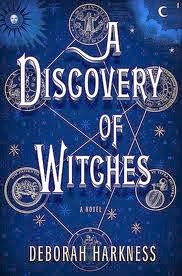
A Discovery of Witches, by Deborah Harkness
This book has been popping up into my field of vision for a solid two years, and the first sequel is already out and keeps showing up as well. Goodreads connections have read it, it shows up on lists of "Best Of" books, and frankly, once something has managed to make itself heard over the usual noise of cultural recommendations, I feel like I need to check it out.
The timing on this one is entirely coincidental--it was sitting on top of the "Leave One, Take One" bookshelf at the hair salon I go to, and I figured that there was literally no way it would be easier to read this book.
The backstory is kind of intriguing--the author is herself an academic with a number of non-fiction books on her C.V. What does a professor of European history and history of science write about when writing successful fiction?
Turns out--she writes Mary Sue Meets The Dreamy Vampire.
Honestly, there is obviously intellect at work, and some lovely passages about the lure of old libraries and the pleasures of intellectual pursuits. Obviously, the scenes set in Oxford are drawn from her own experience. And I am not philosophically opposed to supernatural novels--mixing witches, daemons and vampires into academia is not necessarily a deal breaker. I am willing to go with someone who handles this well. But this main character--Diana Bishop? She positively reeks of Mary Sue-ism to the point where I had what amounts to an allergic reaction and gave it all up.
Our Heroine is a witch. Actually, a Salem witch, the descendant of the Salem Bishop witches, who are supposedly the most powerful ones in America, as well as the daughter of the Proctor line as well. This means that she is Sooper Speshully Powerful, the culmination of the two most powerful magic families in the country. But! She refuses--on principle!--to use magic! Because her parents were killed mysteriously when she was a child, so obviously (?) that tragic backstory explains why she has to do academia like a non-magical person would. Except when she does use magic, but she tries to limit it! And fixing the washing machine shouldn't count, because it might have caused water damage to the apartment below hers! (This is an actual thing she says.)
So, now she is in possession of an honestly earned Ph.D. in history from Harvard, and she's got tenure at Yale. So no privilege or snobbery there at all. Because she didn't get it from using magic! It's all her own intellectual effort! (Because Harvard and Yale are completely meritocratic, and have no Old Boy Networks, or tendency to admit and reward family connections or anything.) So trust us--even though she is Magic, she didn't use it (unless she did?)--she is just one of the top 1% of intellectuals in the US all by herself! Nothing special about her at all!
Now, she's at Oxford doing research for a keynote address on alchemical history. Because that's not magic! She insists it isn't, so it mustn't be! And she calls up a number of books each day, including one called Ashmole 782, that is odd. It's not willing to give up its call slip to the librarian until Diana touches it. She feels the tingle of a spell on the cover. She opens it, and it's all palimsest and magical writing and odd non-standardized alchemical imagery, and since she is so principled (the washing machine doesn't count, I tell you!) she decides she would be too tempted to use magic to understand it, so she sends it back to the stacks.
But somehow, her touching it breaks a magical seal, and now all the magical creatures are aware that Ashmole 782 has been found. It starts asserting a magnetic draw, and all kinds of magical creatures start showing up in the library and trying to get their hands on it, using Diana if possible.
Fortunately, the incredibly handsome and debonair 1500 year old vampire Matthew Clairmont shows up before anybody else does. Even though magical creatures hide their nature from humans, Matthew has managed to become a world renowned expert on genetics and Norwegian wolves, and a couple of other areas, without looking more than 35 and without raising any suspicions. (He is also apparently not worried about having his fame follow him and cause any suspicions in the future either, when his seminal work is still being taught and he still looks 35 decades from now.)
Matthew and Diana are both gorgeous, both Sooper Speshully Powerful, and so of course Diana is absolutely not going to fall in love with him or anything. She even calls home to tell her psychic aunt that. And then she falls asleep in her chair with the window open, and wakes up in the small hours of the morning with the taste of cloves in her mouth.
What? Did you suspect that Matthew the Sooper Speshul vampire came in through the window and watched her sleep? Is this what vampires do now? Thanks, Stephanie Meyer. Thanks a whole lot. But--he had an excuse! He thought maybe she had smuggled Ashmole 782 out of the library, against all the rules and conventions of academic research! So he had to search her apartment! (But mostly he just stood there and watched her sleep, while seeing Powerful Magic seeping out of her skin.)
Powerful magic you say? She is more powerful than she knows? Maybe you have to teach her how to accept her power and control it so it doesn't break loose and wreak havoc. (Substitute the word "sexuality" for "magic" just to make the dynamic between these two characters as creepy as it is.) We are in vintage romance novel territory here--back in the old days of the late 1970s, when the formula required that the heroine be under the age of 22 and a virgin, while the hero had to be wealthy and a good 15 years or more older, as well as sexually experienced but wounded….
Of course, he starts putting the moves on her--I mean, hanging around the library to intercept all the other magical people who want to find that book and think she may have it. Nobody seems to have tried just putting in a call slip, nobody seems to be trying to track what happened to that book after she sent it back. Everybody just seems to assume that she's got it? Like with her at all times, even when running or rowing on the river?
I lost it when the big set piece of the first part of the book is the two of them finding they have something in common, which is--yoga? Seriously? Matthew the 1500 year old vampire puts on yoga pants and puts a mat into his Lamborghini and goes to do downward dog poses?
It's worse than that. The class is for all sorts of magical people--vampires AND witches AND daemons, who we have been told have strict taboos against mingling together. But magical wonderful Matthew has managed to use yoga class (!?!?!) to get these several dozen beings to overcome their natural revulsion in order to--take a yoga class. I am so not buying this at all.
But I stuck it out for about one more chapter, after Diana flounces around at Matthew, then finds out that he built the enormous country home where the class was held--back in 1590, using the architect who had built Hampton Court for Cardinal Wolsey. Then Matthew goes to Scotland to meet with a friend of his and to brood darkly over a chess board--because he is In Love With Diana. Because of COURSE he is--who wouldn't fall in love with someone with exactly zero personality, and who has been nothing but snide and bratty to him?
It's that Sekkrit Power she has (hint: it's really sex) that she doesn't realize she has (really, it's totally sex) and that he knows he can teach her how to harness and use (sex, ya think?)
So at that point, I gave up. You know where this is going, right? They are going to both be in love with each other, but not say anything because reasons. Or they are going to be Forced by Magical Society to be apart, until they overcome the oppressive system from the Sooper Speshulness of their Love (the greatest love story of all time and history, of course.)
I did look up a plot synopsis to see if I was missing anything--and nope. There is a whole lot more Sooper Speshul Magick Powers nonsense, and then. . .time walking? Also a lot of Diana being rescued by her white knight, which--ugh.
Well, at least I know I'm not missing anything. So many other books are already lined up to fill up this particular spot!
Sunday, February 02, 2014
Mockingjay, by Susanne Collins
This is the final book of the Hunger Games trilogy, and there is no mistaking that fact. Collins is so over this series that it's painfully obvious that she could barely be bothered to write this one.
To be fair, I don't have the writing and publication history at hand. I do have some vague recollection that after the first novel hit (and hit HUGE!) Collins went back and wrote two more novels, that were released very quickly in order to meet the demand for more of the story. Which is quite an achievement, and not something I feel that I could do, so Major Kudos to Ms. Collins. Seriously. Seriously bad ass, ma'am!
And I have to say that I admire many many parts of the trilogy, and this book in particular. I especially admire how she opened up the story from the very narrow focus of the first book, and how she took the idea of Hunger Games and recast it for this last book.
I just feel like the whole is kind of half-baked, as if it was rushed through production before it was fully thought through.
Quick synopsis:
In the first book, Collins establishes a post-war dystopian North America of indeterminate size. (Does Canada still exist? Mexico?) The Capitol of the nation of Panem has defeated the Districts, and compels them to send two tributes each year to the arena where they are forced to kill each other for the viewing entertainment of the Capitol. The classical Greek and Roman parallels are intentional.
Our Heroine, Katniss Everdean, is not chosen for the Games, her younger sister is. Katniss cannot bear to let this happen so she volunteers. The Capitol's fascination with the tributes leads to silly fashion shoots and chariot rides and the vapidity of celebrity culture up to the very evening before the Games, and then the tributes are released into a controlled location and forced to fight for their lives. Katniss manages to seem very powerful while not actually killing anybody. In the end, she and the other tribute from her District are the only ones left alive, and they both prepared to poison themselves with berries--which would leave no victors for the Games. The rules are changed for them, and they are both allowed to live.
In the second book, Catching Fire, the 75th anniversary Games have a different format, and the tributes are to be chosen from past victors. As the only female victor from District 12, Katniss is sent back to the arena. There is a Victory Tour, which gives the reader glimpses of all the Districts, as well as more strategy and backstory about the lives lead by previous victors. Collins gives Katniss the additional challenge of not only staying alive through the Games, but also coming to understand how the Games function in the political life of Panem. It's really pretty savvy plot construction, broadening the scope of the story and adding more complex world-building, while also not simply repeating the first book. Katniss has to survive again, and this time it requires different skills and even trusting others.
By the end of Catching Fire, Katniss has been rescued (abducted?) from the arena and flown by a rebel alliance to the mythical District 13. Of course, it's not just a myth, it's a real place that refused to surrender to the Capitol and threatened to use its nuclear capacity to destroy Panem. It was driven underground and cut off from the rest of the country, forced to provide all it's own needs. It is, conceptually, the Sparta to the Capitol's decadent Rome. Everyone is disciplined, rationed, conscripted to service the needs of the whole. There is little margin of any sort, all material goods are strictly inventoried and allocated sparingly. Katniss hates it. She is rarely allowed outside, she spends a lot of time passive-aggressively avoiding the obligations. This puts her in conflict with the leader of District 13, President Alma Coin.
This goes on for a very long time, as Katniss shifts the tiny distance between traumatized victim and bratty teen. Her partner in the Hunger Games, Peeta, was left behind in the Capitol, and she feels guilty for that. Gale, the boy she spent her time with back home, is slowing becoming militant in his opposition to the Capitol. Stuff happens with her family as well, as Prim is growing up but Katniss doesn't want to see it.
(Katniss is such an angsty martyr at this point, it would be funny if it weren't so dull.)
Eventually, a plan is developed to use her as the face of the rebellion, which means even more boring grooming sequences and photo shoots. Admittedly, I appreciate the fact that Collins is making a point of how much work goes into making someone camera ready and looking "naturally" beautiful--I do! Female beauty standards require a fair amount of work and attention, and Collins gives it to us at full volume. Katniss is also amazingly bad at acting, and the videos of her pretending to fight are risible.
Eventually, a plan is hatched that Katniss and her team--including camera operators and beauticians--will be taken to the Capitol where rebels are fighting a guerrilla style war. The plan is to drop her into areas that have already been secured, do some mock fighting, and then pull her out. Propaganda, pure and simple. What could go wrong?
Well, obviously, EVERYTHING could go wrong, and does. The team ends up watching atrocities and experiencing deaths, they find themselves in real battles, and the death toll grows. The President has booby trapped the Capitol with Games-like weapons, and the team ends up working their way through basements and apartments. At one point, they end up hidden in the basement of a former Games stylist for days, doing absolutely nothing while the war advances to a climactic moment. They join the assault on the President's palace, where Katniss witnesses the moral bankruptcy of the regime. A concrete enclosure/bunker has been erected in front of the palace, and filled with children. Any attempt at storming the gates will kill the kids. Then from somewhere a fighter jet strafes the kids--is it a rebel plane, or a double feint from the President? The rebels respond by sending in medics--and of course the first medic killed by the booby trapped kid enclosure is Prim.
Katniss is once again deeply traumatized, and also in the middle of things while not actually doing very much. She ends up inside the palace after it has been taken by the District 13 forces. President Snow is a captive--kept very nicely in a comfortable set of rooms, which offends her deeply. Strategy sessions are held, and Katniss has a seat at that table. A proposal is bruited about that a final Hunger Games be staged, using the children from the Capitol. And despite her experience of the horror, Katniss votes to hold them, to spread the pain around. It's a jarring choice, and not one well supported by the author.
Things keep happening off stage, and finally, Katniss is called upon to serve as President Snow's executioner. She stands on the balcony of the palace along side the new President Coin, and she has managed to discern that the new system is going to be a corrupt and horrible as the old one. Not sure what gives her this insight--perhaps she's just delusional at this point. In any event, she shoots the new president instead of the old one, but Snow obliges everybody by dying via cyanide capsule or something like it.
Then Katniss goes home to District 12, where Peeta comes too. The district had been bombed to the ground earlier, so almost no one is there, and in the end, Katniss marries Peeta because really, she's too tired to do anything else? This epilogue is weirdly tacked on, serving primarily as a declaration that Collins is done, done, DONE with this series and she's going to tie it all up so nobody can make her go back to it. After "10 or 15 years" Katniss caves in and has a couple of kids with Peeta, because she's pretty sure they won't be sucked up into a rebooted Hunger Games, and anyway, Peeta really wanted them.
Gale is given a "very important" job in District 2 and disappears from her life and the epilogue. Shippers--you have been told. No Gale/Katniss pairing will be allowed.
Kudos to Ms. Collins for tweaking the formula with each sequel, so they aren't quite the same story over and over again. On the other hand, it's clear that she was ready to be done, and did whatever she needed to to end the saga.
Saturday, February 01, 2014
The Dead in Their Vaulted Arches, by Alan Bradley--a Flavia de Luce Novel
I rated this 3 stars, although it might be a 3.5.
First of all--what happens? The overarching pall of the series is lifted--we learn the fate of Flavia's mother Harriet. Harriet's absence has been of major importance to the family generally and to Flavia specifically. Flavia was so young when Harriet disappeared that she has no memories of her mother at all. Meanwhile, her older sisters have tormented her with this fact, alternatively accusing her of being the reason Harriet left, or claiming that she was adopted. In either case, Flavia feels the lack of her mother acutely, and she dreams of the possibility that Harriet will someday return.
More broadly, Haviland de Luce has mourned his lost wife for ten years, remaining remote and unapproachable, leaving his daughters to essentially raise themselves. The family estate is also in limbo, as Harriet's presumed death and lack of a will have created such a tax burden that the family lives basically in poverty. Harriet's absence makes the entire premise of the series possible. At the end of the previous book, the de Luces receive a telephone call, which Father reports "Your mother has been found."
The first five chapters of this book describe the preparations for her return--a special train, military escort, etc. etc. Which seems odd, until you realize that Harriet is, in fact, dead and it is her body being returned to Buckshaw. And, of course, that was exactly what you expected, except that you hoped otherwise.
Harriet is also obviously more than just a "missing mum." The military honors, the security provided by the British Home Office, the special train, and Winston Churchill on the platform. Up until now (if I am recalling correctly), Harriet's disappearance has been treated as if it were the unfortunate result of an adventurous spirit who couldn't remain at home tending to children when there were mountains to climb and Tibet to explore. She was an aviatrix, an English Amelia Earhart, who simply never returned. Now, however, we are learning that she had an official role--and she disappeared while on a mission for England during WWII. This is not just a domestic tragedy, and the world beyond Bishop's Lacey and Buckshaw has entered the picture.
This coincides with a deeper focus on Flavia's character as well. Flavia is nearing her 12th birthday, and without trying, seems to be maturing. She has begun to see behind the surfaces of her family members and is beginning to show some real empathy. It's a welcome development--she remains fixedly eccentric as ever, but is somewhat less combative.
In developmental terms, her emotional intelligence is starting to catch up with her I.Q.
Regularly throughout the novel, she notices things about her family that had escaped her before. Watching her father navigate the funeral arrangements in his deep grief, she realizes that "the more he felt, the less he showed." He was not merely an absentee parent even while present--he was a complicated man dealing with enormous sadness. Flavia also stops to notice that her eldest sister Ophelia is quite beautiful, and she shares a hug with Daphne as they each find comfort in the other.
Other family members arrive as well, including Haviland's sister Aunt Felicity, and Harriet's sister Lena, who also brings her young and precocious daughter Undine to Buckshaw. Undine is less a character in her own right than a reproduction of Flavia--young, bright, bored, and obnoxious. She exists almost entirely to show how Flavia has grown, since rather than recognize herself in the child, Flavia is annoyed by her. Instead of responding sympathetically, Flavia begins to adopt the tactics her sisters used against her, engaging in a battle of one-upmanship. And not always winning.
The book begins to reveal the backstory of Flavia's parents, both fighting in the Pacific, where Haviland was captured by the Japanese and subjected to the horrors of the POW camps. Harriet toured those prisons and the two managed to meet without giving themselves away. Harriet never made it home; Haviland did, a broken and grief-paralyzed shell. These are the stories that Flavia is hearing for the first time, expanding her world and changing her perception of her place in it.
It is no coincidence that this is the book where she flies in her mother's old Gipsy Moth plane as well. Bradley describes how the world looks different, and smaller, from the air, familiar and changed at the same time, without hammering the metaphor. Flavia's vision has expanded.
As a character study, this book is far more successful than I would have expected. The changes are not forced, and are scattered among the reliable standards of the series--her fascination with poison, battles with her sisters, extra-long descriptions of recondite chemical tests and facts.
However, the book as a whole feels clumsily stitched together--there are set pieces that remain well written and engaging, but they fail to connect with each other either logically or emotionally. This is especially damaging to the mystery aspect of the book--too often the book drops narrative elements and fails to pick them up again, or fails to treat them consistently.
This most egregious example happens at the end of the novel, during the funeral service. Earlier, Flavia found Harriet's oil skin wallet, which happened to contain her will. While running chemical tests on the wallet itself, Flavia found invisible writing that seems to spell "Lens Palace." Then, while sitting in church and gazing at a stained glass window of Samson and Delilah, Flavia notices that the gothic script under the window is hard to read--the M looks like a W, for example. With that, she realizes that "Lens Palace" is actually "Lena de Luce," and her aunt is the one who killed Harriet.
The service then requires that she walk to the chancel, where she stumbles, and when she looks up after catching herself, she sees three police officers advancing on the murderer, who then bolts.
But we don't know why this is happening now. How did the police suddenly decide that Lena needed to be arrested? Flavia hasn't told them her thinking, nor have they seen the clues she has. The murderer hasn't done anything to give herself away, and the stumble is not a prearranged signal or anything. There is no reason why the police are acting at this particular point in the funeral service, rather than before or afterwards. Whatever logical method the police used to solve the mystery remains unexplained, while Flavia's solution is also not communicated to anybody either. So why does the murderer suddenly lose nerve and bolt? No reason is given, which feels like a cheat. I mean, Sherlock Holmes wouldn't solve a mystery, only to be told that the criminal has already been arrested for some unconnected matter. Like littering?
Which is too bad, because while the series is certainly an exploration of Flavia's character growth, it is also a murder mystery series, and solving the murder needs to remain satisfying.
There is also a scene where Flavia walks out of her house (Buckshaw) and across the lawn to where two characters are working on an airplane. There is no reason why she goes at that particular time, and once she is there, she simply looks at them and then walks away. As far as I can tell, there is no reason for the whole scene. Why is it there? It doesn't amount to any sort of clue, it seems oddly out of character for Flavia to just walk out of the house at that moment for no reason.
The service then requires that she walk to the chancel, where she stumbles, and when she looks up after catching herself, she sees three police officers advancing on the murderer, who then bolts.
But we don't know why this is happening now. How did the police suddenly decide that Lena needed to be arrested? Flavia hasn't told them her thinking, nor have they seen the clues she has. The murderer hasn't done anything to give herself away, and the stumble is not a prearranged signal or anything. There is no reason why the police are acting at this particular point in the funeral service, rather than before or afterwards. Whatever logical method the police used to solve the mystery remains unexplained, while Flavia's solution is also not communicated to anybody either. So why does the murderer suddenly lose nerve and bolt? No reason is given, which feels like a cheat. I mean, Sherlock Holmes wouldn't solve a mystery, only to be told that the criminal has already been arrested for some unconnected matter. Like littering?
Which is too bad, because while the series is certainly an exploration of Flavia's character growth, it is also a murder mystery series, and solving the murder needs to remain satisfying.
There is also a scene where Flavia walks out of her house (Buckshaw) and across the lawn to where two characters are working on an airplane. There is no reason why she goes at that particular time, and once she is there, she simply looks at them and then walks away. As far as I can tell, there is no reason for the whole scene. Why is it there? It doesn't amount to any sort of clue, it seems oddly out of character for Flavia to just walk out of the house at that moment for no reason.
There are a couple of other clunky matters as well. The first is the death of the man at the train station. As Harriet's coffin is being unloaded, a strange man in a long coat approaches Flavia, recognizing her as the spitting image of Harriet. He attempts to give her a warning: "Tell your father that the Gamekeeper is in trouble. The Nide is under…" something interrupts him, and then he is pushed beneath the train to his death. Flavia is the first to his side, and describes the sad sight of his arm above the platform, the golden hairs blowing in the breeze.
So despite this chilling experience, and the clear invitation to investigate (who is the Gamekeeper? What is a Nide?) Flavia doesn't even think about the event much at all. I accept that she doesn't tell her father, allowing him to grieve without distraction for a while, but I find it very hard to believe that she doesn't even think about what it all might mean, or try to figure out who to interview who might have some information. She never even tries to figure out what the police might know about him. She just lets an obvious murder drop--this is not the Flavia we have known for the last five books.
Another oddity is her quest to revive her mother. Nuts, of course, her belief that she might be able to concoct a chemical mixture that would restore Harriet to life, but she takes it seriously, and Bradley devotes quite a large chunk of narrative to her quest. One chapter is spent detailing her research into the use of thiamine, based on some cryogenic experiments of her great uncle Tarquin, detailed in the notebooks in her chemistry lab. There is a short sequence where she learns a jujitsu move from her father's "man" Dogger: a blow that she believes will jolt a corpse back to life. There is another chapter spent trying to obtain the chemicals, first from the apothecary and then from the local doctor. The apothecary refuses her, but his reclusive sister (wife?) slips her the substance, claiming it is repayment of a debt to Harriet. The doctor happens to be carrying the other chemicals in his bag when he nearly hits Flavia at an intersection. It was a dosage for a patient who just died, so he simply hands it over.
These are almost suspiciously easy, and Flavia speculates that perhaps Harriet herself is assisting the project, supernaturally.
This is about four chapters of preparation, and doesn't include all the logistics about the family standing vigil with Harriet's coffin, what hours they are on duty, how Flavia manipulates Ophelia into switching shifts, and then how Flavia runs the line of mourners off. There is yet another chapter of Flavia opening the coffin, cutting through the inner zinc liner, and seeing her mother's face for the first time. (There is an explanation of how this is even possible after ten years, involving the body being originally preserved on the icy glacier, then packed in dry ice for transport and preservation.)
At this point, we have followed this plot for dozens and dozens of pages, with all its numerous steps and Flavia's confused motives--she would like to have the chance to have a mother, she would like to return Harriet to Haviland to ease his sadness, she would like to be a hero--this is a major component of the book. Sure, it's nuts to think that she could actually succeed, but the quest has become narratively hefty.
Which makes the denouement of it so disappointing. Just as she has looked at her mother's face, there is a knock on the door of the room, and (after some swift tidying up of the area) Flavia opens the door to find her father and two Home Office officials who insist on taking over the area and ejecting the family.
And Flavia doesn't even seem bothered in the least. This whole plan, the whole emotional need for a mother, all the work she has put into trying to revive her mother--gets foiled by the intrusion of a couple of goons, and Flavia simply walks away. She doesn't try again later, she doesn't try to snoop on the officers to find out why they are there (and we never learn it either)--in fact its only after quite a few scenes that she mentions that she lost her chance to try. And it's treated off-handedly, shrugged off as a missed chance.
I just can't believe that. Flavia wouldn't ignore the murder of a man on the train platform, especially after he gave her such a cryptic warning. Nor would she just walk away from the kind of major project that revivifying Harriet became. Maybe--just maybe--she would give up if she doubted it was possible--but the book doesn't make that case either.
These feel like authorial slips to me, rather than evidence of Flavia maturing. It's as though Bradley crafted the chunks of the story, but ran out of time to link them together convincingly. Which is frustrating, because the elements of greatness are there! Flavia is a fascinating character, and the mystery is gripping.
Friday, January 31, 2014
The Goldfinch, by Donna Tartt
Straight up--I really liked this book. Which is unusual enough that I might as well say so up front.
This is a very long book, beautifully written, nicely observed, and generally absorbing. To be honest, I think it got a bit flabby toward the end, and a leetle bit self-indulgent in the last 50-ish pages. but overall definitely worth the time and effort to read. In fact, as distracted as I am by shiny things ( a word which here means "the internet") I have found it hard to read actual physical books. But this one was hard to put down.
At the heart of the novel is an exquisite painting by Carel Fabritius called "The Goldfinch," a real painting by a Dutch master painted in 1654.
Because this work actually exists, but its loss and recovery detailed in the book are fictional, one has to suspect that the painting has a symbolic/metaphorical value. This sense is heightened by the heavy debt the book owes to Dickens generally, and Great Expectations specifically. (Of course, it's been ages and ages since I've read Great Expectations, so someone else will have to do a better job than I can, tracking the influences).
So, the book moves in four great sections, giant blocks of narrative that carry us through the narrator's life from about age 13 to roughly his late twenties. The first sets up the baseline of his life, the normal that is irrevocably disrupted. The narrator, Theo Decker, lives in New York City with his mother, his father having recently abandoned them, mostly to Theo's relief. However, he has gotten into trouble at his prep school, and the book opens on the morning he has been called to a meeting with the principal and his mother to face suspension or expulsion for some breaking and entering of homes he has been doing with a classmate. The meeting is for late morning, and on the way they stop at the Met Museum to see an exhibit of Northern European master paintings--one of which is the Goldfinch.
These details are efficiently sketched but not dwelled upon--we get a feel for the pace of Theo's life, with glimpses of the stressors: his father's alcoholic unpredictability, his devotion to his mother, his chafing need to act out, his fundamental decency…when the bomb goes off.
Because the bomb is the engine that starts to plot, I had been aware of it and was waiting for it. If I hadn't known, I might have been surprised, just as Theo was. After all, the scenes in the museum are not obviously leading up to a Major Event like that--there is detail about some of the paintings, description of some of the people, the minor logistics of Theo staying in one gallery while his mother goes somewhere else. And there is a girl, roughly his own age, who Theo is fascinated by but afraid to speak to. All of this beautifully observed quotidian activity doesn't obviously point to a suitcase bomb, which would certainly be unexpected in real life, and maybe wasn't obviously telegraphed…
The gallery is destroyed, Theo is knocked unconscious, and when he comes to, he has a confused conversation with the grandfather of the girl he saw earlier. Both of them are likely concussed, if not lightheaded by blood loss. Somehow, the man convinces Theo to take the canvas of The Goldfinch for safekeeping (it had been blown out of its frame), then gives him a ring and cryptic directions: "Hobart and Blackwell. Ring the green bell" before he dies.
Somehow, Theo finds his way out of the museum by a side door, and goes home to wait for his mother. Tartt is very careful about the details of how this happens without Theo being stopped by police, or given any emergency medical care. It is this careful writing that makes the outrageous plot device absolutely believable--and it shouldn't be--but has to be for the book to work. And the book does work.
Tartt carefully handles his dislocation and grief. He ends up staying for months with the Barbours, the WASPy family of an old school friend. The glamorous apartment, relentless achievement, and chilly emotional life of the family is reminiscent of a J.D. Salinger book. Meanwhile, Child Protective Services tries to find living relatives, including a father who clearly did not wish to be found. (Child support evasion do you think?) During this time, Theo makes the pilgrimage to "Hobart and Blackwell" where he finds the girl from the museum, Pippa, and Hobie, a gentle giant of a man who restores the antiques that Blackwell bought and sold.
Theo falls in love with Pippa (echoing Pip's love for Estella from Great Expectations) without actually spending much time with her. She was seriously injured in the blast, and is soon shipped off to live with an aunt. Theo finds a soothing peace in the furniture repair shop, and spends increasing amounts of time there with Hobie--they share an appreciation for old things, and they both miss Pippa.
Just as Theo is about to fully integrate into this new life, his father shows up and again his life is disrupted. Larry Decker has a flash style, a Las Vegas girlfriend who goes by "Xandra," and sells everything from the apartment Theo shared with his mother in a matter of days. Theo is roughly transplanted to Vegas, where the Deckers live in a shoddy McMansion in an unfinished housing development. Theo's house is the only one occupied on the street, and the stink of the burst housing market is conveyed through the rotting garbage--no trash service, no pizza delivery, no buses, and the desert threatens to creep back in and reclaim the place.
Theo's father remains both flash and unpredictable. He claims to have stopped drinking, by which he means now he drinks only beer and he takes many different types of drugs. He gambles for a living, moving from baccarat to bookmaking on sports events, his manic behavior muted only by the odd hours he and Xandra keep. Theo is essentially abandoned in the house, feeding himself mostly on bar food Xandra brings home from her job at a casino.
Theo manages to find another inappropriate friend--Boris, the son of a Russian mining engineer, who has lived all over the world. Boris enables Theo's genetic addictive personality, and soon the two of them are spending most of the next two years drinking and taking drugs, watching old movies and being wasted.
Matters here come to a head as Larry's gaming losses mount. A couple of visits from an urbanely threatening enforcer embodies the looming catastrophe. One day, Larry screams and threatens until Theo calls a lawyer about transferring his inheritance into an account--presumably so Larry can pay off his debts. The lawyer (the Dickensian "Bracegirdle") says the money can't be transferred, only used to pay education bills, and Larry's transparent scheme is foiled. The next day, Larry dies in a one-car accident (suicide or murder?) and Theo panics. Unwilling to fall into the clutches of Child Protective Services again, he grabs Xandra's dog, the well-wrapped Goldfinch, and a few personal items and buses back to New York, where he turns up on Hobie's doorstep again.
Again, Tartt carefully describes the maneuverings that make this arrangement believable. Bracegirdle recommends boarding school, but instead, Theo manages to get into an early college program that allows him to stay in the city. Tartt describes this period as a time when Theo has the raw talent to succeed, but is so damaged by the combination of dislocation, trauma and drugs that he puts in the bare minimum of work, failing in a very believable way. But he's got a family of sorts--Hobie and the occasional visit from Pippa.
The book then skips ahead eight years. Theo has graduated from college, and has taken over running the antique sales business that Blackwell ("Welty") ran before his death. He has become a full partner in the firm, and is now engaged to Kitsey Barbour. The Barbour family has declined in the intervening years, and Theo's friend Arthur was killed in a boating accident with his disturbed father. (This section smacks rather of Brideshead Revisited in the way the family is less dazzling, and the narrator now feels enough of a social equal to marry into it.)
Theo has the good eye and reassuring manner necessary to be a successful antiques dealer--and seems to be so- but he remains morally corrupt. Pressured by the business's unpaid taxes and precarious finances, he begins to sell rebuilt pieces as original antiques. Carefully priced high enough to be believable, but low enough to be tempting as "a steal," he primarily sells these pieces to the nouveau riche--movie produces from California, oil men from Texas. Theo begins to exhibit the jittery megalomania of his father, torn between pride and guilt.
Predictably, Theo is found out, by someone far more unscrupulous than he, who seems to be playing a larger game, and refers obliquely to The Goldfinch, which Theo still has, taped up in a mess of newspaper and packing tape, sitting securely in a archival storage room. This is when Boris reappears and Theo's life is again significantly disrupted.
Because Boris stole the painting back in the old days in Vegas, and now has a dodgy international business career that involves mob members and drug deals. The painting has been used as collateral on a number of major deals, and recently disappeared in a bust. At Theo's glittering engagement party (where he is mostly marginalized) Boris whisks him away to Amsterdam to retrieve the painting.
Theo ends up being driven around the city, disoriented, frequently drunk or stoned, and eventually sting armed by Boris into a confrontation in an after hours deli, where one man ends up dead. Subsequently, another set of thugs attack Theo and Boris in an empty parking garage, and Theo ends up shooting one of the men. He and Boris split up, and he spends the next several days in a fog of terror and foreboding, waiting to be arrested for the murder, and unable to leave, since Boris has his passport. The painting is once again missing, snatched by one of the criminals during the shoot-out.
Ultimately, and decidedly off-stage, Boris locates the painting and manages to lead the "art police" to its location, where a number of other important stolen works were stored. Boris delivers a suitcase full of reward money to Theo, who (in the epilogue) uses it to repurchase all the faked antiques he had sold.
He doesn't quite get the girl--Kitsey is cheating on him with the man she really loves, Tom Cable, the schoolmate who got Theo into the breaking and entering at the beginning of the book. She still wants to get married, even though she doesn't love Theo, because they are well matched. It's not clear what Theo is going to do about that. Pippa remains his true love, but she is very clear that she doesn't love him. Theo is forced to realize that his feelings for Pippa are tied up with his grief over losing his mother, and that he needs to let them go.
The last 50 pages or so are the flabbiest of the book--the plot has been tied up, Theo is flying around the country doing penance by buying back furniture, and Tartt indulges in a sort of moralizing about the meaning of art and why it is Important. Skip those.
Luxuriate instead in the lovely writing she dedicates to the tempos and textures of Theo's life. The cold rainy winter morning in the City, where the miserable weather is redeemed by the beauty of the museum as a place of respite. She evokes the mote-filled light of a quiet antiques shop, as well as the frosty discomfort of an immaculate apartment that is photo ready and superficially chic, but not comfortable. Even the way the desert sunlight is different from the weaker sun of New York is deftly described. Theo's life is believable down to the details, because Tartt is so careful to observe and report all those details.
Looking back on this book, it is hard to avoid the conclusion that Tartt is a maestro of the altered consciousness. Theo spends almost all of the book in some sort of clouded state, either through grief, concussion, drugs and alcohol, or fear. Perhaps that is Tartt's real subject--the way perception is impaired. Her first novel, The Secret History, had as its central showpiece the hazy perceptions of a Dionysian rite, followed by the corrosive effects of guilt on the participants and their relationships. The Goldfinch revisits many of those same emotions.
Why is this such an enjoyable book? What is the point of over 770 pages of this man child's life? I'm not sure I can answer that. Perhaps the secret is in the pacing, deliberate but not slow, and the smoothness of the writing. I thoroughly enjoyed it.
Friday, December 06, 2013
S., [The Ship of Theseus], by JJ Abrams and Doug Dorst
So this book--is not so much a novel as it is--something else? A project, perhaps? An artifact? An exercise in multi-genre literary enhancement? The sort of set dressing that pervades visual media?
All of the above.
At its most basic, S. is sold as a book. It comes as a book inside a slipcover, sealed in cellophane. The slipcover is black with a large, gothic "S." printed on it--also in black. there is a sticker that holds the book inside the cover, printed with a monkey on the front side, with the names of the co-creators. On the back is an impressive masted ship. These are not random images.
Inside is a book that has been carefully constructed to look like a vintage library book. The cloth cover is drab, the graphics are definitely mid-century. Ship of Theseus, by V.M. Straka. There is even a Dewey Decimal sticker on the spine, listing it as "813.54 STR 1949."
[But this might be an error! Dewey number 813. 54 is for "American literature in English, 1945-1999," but the whole point of the book is that Straka is unknown--but none of the leading "candidates" for being Straka is American. Furthermore, the book was translated by the mysterious F.X. Caldeira. So the call number is wrong for Ship of Theseus (should be somewhere in the 890s perhaps), although it is closer to right for S. Of course, the number for S. should be "813.55 ABR 2013." Hmmmmm.]
The library motif continues inside, with browned pages, a "stamp" printed on the inside cover "BOOK FOR LOAN" and a replica of due date stamps in the back, showing desultory borrowing from 1957 and ending in 2000. Patrons are instructed to "KEEP THIS BOOK CLEAN"--pencil marks or other defacement to be reported to the librarian.
[I distinctly remember being told by the school librarian at my elementary school that we were expected to wash our hands before reading library books. We were even issued oil skin book bags to carry our books home from school to keep them safe from the weather. Even then, I thought it was nuts--and I continued to read library books at the table while I ate lunch.]
Already, this review has become even more digressive than most of my others. I am chalking this up to the power of the physical object--the book, not just the words inside it, is really the topic of this project. It is a love letter to the book as object.
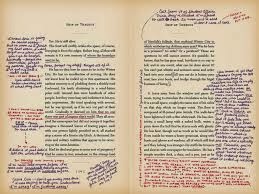
Take a look at a "typical" page.
The text of the novel "Ship of Theseus" is the work of mysterious author V.M. Straka, a writer of 19 books whose real identity is unknown. The authorship controversy is more popular than the actual novels. Ship of Theseus is his last book--he reportedly died in 1946, in Havana, and some of the last chapter of this book was lost. He may have been killed. The book was originally written in Czech (I think?), and translated by F. X. Caldeira, who wrote an introduction and the footnotes. Caldeira was the sole translator of Straka's works from 1924 on, but never met the writer in person. Caldeira is supposed to be a Brazilian who died in his own home town in 1964.
The margin notes come in five different sets, representing five different time periods.
[This is, in miniature, the theme of Straka's work. It is no coincidence that there are nineteen organs to rent--nineteen is a recurring number that stands for Straka's group of radical labor activists, who constitute a group called (confusingly) "The S" in Straka's "real" life. So the Ship of Theseus novel is in some ways Straka's project to document the history of "The S" with it's losses and turncoats. The story of the organ renter is replicated in the larger story of the protests against the arms manufacturer Edvar Vevoda--which is itself a fictionalization of Straka's efforts against arms manufacturer Bouchard.]
S enters a tavern, sees a beautiful woman reading Don Quixote, and then gets shanghaied onto a boat. The boat has nineteen sailors, who all have their mouths sewn shut, but who spend their off duty time writing. Time passes differently on the boat, so when S next lands, several years have passed. He gets swept up into a demonstration against Vevoda which turns deadly. Vevoda's own brown coats plant a bomb to discredit the labor movement. S escapes with four labor organizers (who are versions of Straka's own compatriots). In their attempt to escape, the other four are all killed. Only S survives, and when he returns to the ship, there are only 15 sailors.
The story continues with eerie occurrences, semi-magical locations, and S's own obsession with the woman from the tavern who has several names. S muses on his own identity--will he be able to remember who he is, or is he only who he has become? "Ship of Theseus" is a philosophical conundrum, like "my grandfather's axe"--if you replace all the pieces of the ship, is it still the same ship? ("This is my grandfather's axe--I replaced the handle and my father replaced the head." Is it?) If S replaces whoever he had been with all the actions he takes in the book, does the old S even exist any more?
If is were a "real" novel, really written by a writer named Straka, it's not something that would interest me particularly, because it's a justification of why labor has to take up arms against capitalists, and Straka apparently murdered a fair number of people in his day. It reads like early 20th century political struggles that ended with the recognition of the right to unionize. Important, certainly. Timely again, as "right to work" laws proliferate and union membership drops. It's kind of an extended self-justification, and not a topic I would pick to read myself, even with the eerie fantastical elements.
But that is not the whole story.
There are several other stories superimposed on this one--"Palimpsest upon palimpsest" as the book puts it at one point. The first additional story, chronologically, is that of F.X. Caldeira, the translator of the book. Popularly supposed to be a man, over the course of the book Jen and Eric discover that F.X. is actually Filomena Caldeira, a woman who apparently carried an unrequited love for Straka for decades, despite never having met him. Her footnotes in this volume are eccentric, and are revealed to be coded messages for Straka, published in the belief that his Havana death in 1946 was a hoax and that he might look for her. She passes on some information about who was the mole in "The S" who gave away some of their members. She codes her love for Straka and where she might be found. She "reconstructs" the final chapter of Ship of Theseus to give her doppelgänger a happy ending with S.
Eric tracks her down, as she is still alive and alert, and answers some of Eric's questions. In the course of the Jen/Eric correspondence, she dies, perhaps the last living link to Straka.
There are other stories, all conveyed in the Jen/Eric marginalia. Chronologically, the earliest is the story of Eric, a grad student working on the question of Straka's real identity. There is apparently no locatable biographical evidence of Straka's existence, and the authorship questions has grown to eclipse the study of the novels themselves. Eric's advisor is a professor named Moody, and he had a relationship with a fellow grad student named Ilsa. By the time the J/E correspondence begins, Eric has been disgraced and expelled from the school. Moody has apparently stolen Eric's scholarship, with Ilsa's help, in order to bring out his own work on the authorship question. Eric acted out, vandalized one of the buildings on campus, and ended up in a mental hospital for a while. Now, he haunts the campus, trying to avoid being reported, while he continues to work on the question of "who was Straka?"
After getting interested in Straka's works, Jen becomes his co-conspirator. She is suffering from a serious case of senior slump, and finds renewed passion in reading Straka's novels and working out Caldeira's embedded ciphers. Her coursework suffers, her parents worry and attempt to intervene. Her interest in Straka gets Ilsa's attention, and there are some threats to her own safety. Jen reports that a barn on her parents' property was burned down, and that she is being spied on and followed. Ilsa suspects her of academic dishonesty and she is called to a disciplinary hearing. J/E interpret this as being orchestrated by Moody to silence them and promote his own theory.
I felt this part was pretty unbelievable. It parallels the way Vevoda chased S, but S really did pose a threat to Vevoda's business model. I'm not sure the stakes of academia are convincingly high to justify such cutthroat tactics. (I'm not convinced they are that high, especially in literature departments, but I don't think Dorst has written this believably enough to cause me to suspend my skepticism.)
The academic espionage continues with Straka artifacts going missing from international archives, and the mysterious death of a French professor soon after his own book on Straka's real identity is published. There is a mysterious "Serin Institute" that starts funding Eric, but it's not clear who they are or why they care about Straka at all.
Jen and Eric parse the text of Ship of Theseus, drawing the parallels between characters and real life Straka associates. They notice the number of them who died from mysterious falls--perhaps Bouchard is still in business and still sending agents to silence them? Are those same agents after J/E? Is "Straka" just the pen name of all the members of "The S," and are the nineteen novels ascribed to him each written by a different person? If so, does this make Filomena Caldeira the real organizer?
Meanwhile, Jen and Eric use phrases of the novel to spark their own conversations, revealing their histories, arranging secretive meetings (in the back row of a theater showing noir films, of course!) and ultimately falling in love. In deliberate counterpoint to the Straka/Caldeira story, J/E get a happy ending. Jen finishes her coursework, doesn't get disciplined, and graduates. She and Eric move to Prague to pursue writing their own book about Straka's identity. Their last marginalia is written with a shared pen, in a shared apartment--sort of a nostalgic activity.
In addition to all of that, of course, are the many pieces of ephemera interleaved in the book. This is where the valentine nature of this product really shows through--all the different types of materials are faithfully reproduced. A campus map drawn on a cafeteria napkin is really on a napkin, one printed with the fictional logo of Pollard State University no less. Business cards feel different from postcards, which are different from the several pages of lined notepad paper. This is not so much a "love letter to the written word" (as it says on the back of the slipcover), but a love letter to the idea of a BOOK--the physical artifact. The differing colors of ink, the different handwriting styles, the way it physically holds their letters and postcard to each other--this is something that simply cannot be replicated by an ebook.
(There is apparently an ebook, which does allow for erasing the marginalia, if you want a clean copy of the Straka novel for some reason. There is also apparently an audiobook, and I have NO IDEA how they are going to pull that one off!)
So in the end--what do we have? We have a commitment to the idea of the book as a physical object. We have a demonstration of how a book (and writing) can contain multiple time streams, how it conveys and preserves ideas and personalities over time. It offers explicit and implicit puzzles, recording and enacting (for real readers in real time) how stories can engage us and how we work to solve the puzzles of literature.
I have some questions that I don't have the answers to yet.
The Eotvos Wheel: what appears to be created in conjunction with the book--ostensibly amateur scholarship on V.M. Straka, with crime scene photographs of the Havana hotel room where Straka [may have] died in 1946, a list of the candidates for the "real" Straka. Interestingly, the blog has a few entries dated 2009, and then lay fallow until new postings began in November 2013, after the publication of the book. http://eotvoswheel.com
S.Files22: apparently a reader created site which documents many of the idiosyncrasies of the book and is working to find and solve any additional ciphers not revealed in the Eric/Jen notes to the text. http://sfiles22.blogspot.com
All of the above.
At its most basic, S. is sold as a book. It comes as a book inside a slipcover, sealed in cellophane. The slipcover is black with a large, gothic "S." printed on it--also in black. there is a sticker that holds the book inside the cover, printed with a monkey on the front side, with the names of the co-creators. On the back is an impressive masted ship. These are not random images.
Inside is a book that has been carefully constructed to look like a vintage library book. The cloth cover is drab, the graphics are definitely mid-century. Ship of Theseus, by V.M. Straka. There is even a Dewey Decimal sticker on the spine, listing it as "813.54 STR 1949."
[But this might be an error! Dewey number 813. 54 is for "American literature in English, 1945-1999," but the whole point of the book is that Straka is unknown--but none of the leading "candidates" for being Straka is American. Furthermore, the book was translated by the mysterious F.X. Caldeira. So the call number is wrong for Ship of Theseus (should be somewhere in the 890s perhaps), although it is closer to right for S. Of course, the number for S. should be "813.55 ABR 2013." Hmmmmm.]
The library motif continues inside, with browned pages, a "stamp" printed on the inside cover "BOOK FOR LOAN" and a replica of due date stamps in the back, showing desultory borrowing from 1957 and ending in 2000. Patrons are instructed to "KEEP THIS BOOK CLEAN"--pencil marks or other defacement to be reported to the librarian.
[I distinctly remember being told by the school librarian at my elementary school that we were expected to wash our hands before reading library books. We were even issued oil skin book bags to carry our books home from school to keep them safe from the weather. Even then, I thought it was nuts--and I continued to read library books at the table while I ate lunch.]
Already, this review has become even more digressive than most of my others. I am chalking this up to the power of the physical object--the book, not just the words inside it, is really the topic of this project. It is a love letter to the book as object.
Take a look at a "typical" page.
The text of the novel "Ship of Theseus" is the work of mysterious author V.M. Straka, a writer of 19 books whose real identity is unknown. The authorship controversy is more popular than the actual novels. Ship of Theseus is his last book--he reportedly died in 1946, in Havana, and some of the last chapter of this book was lost. He may have been killed. The book was originally written in Czech (I think?), and translated by F. X. Caldeira, who wrote an introduction and the footnotes. Caldeira was the sole translator of Straka's works from 1924 on, but never met the writer in person. Caldeira is supposed to be a Brazilian who died in his own home town in 1964.
The margin notes come in five different sets, representing five different time periods.
- First are penciled marks and brief remarks, made by Eric at about age 16. He stole the book from the library--so presumably his is the last due date stamped in the back, October 14, 2000.
- Twelve years later, Eric's book is found by Jen Hardway, an undergraduate at the (fictional) Pollard State University, who works at the library. Jen found the book, read a few chapters and returned the book to a library workroom with a note. She and Eric begin passing the book between them, making notes in blue cursive (Jen) and black block letters (Eric).
- Later, Jen switches to yellow, and Eric responds in green.
- Still later, Jen writes in purple, Eric in red.
- Finally, they both write in black ink.
At any given time on the page, you might be reading from any of these five time periods, plus Caldeira's editorial notations. Add in the original text, and suddenly as a reader, you are keeping track of seven different time streams.
It's almost like Minard's famous map of Napoleon's Russian Campaign of 1812.
The timeline is even more complicated, if you accept that Caldeira and Straka exchanged drafts of the work, translating even before the book was complete--and that Caldeira finally ended up reconstructing or inventing parts of the incomplete final chapter.
So what is this book? What has V.M. Straka written that has caused academics to search for his true identity? It intrigued Jen enough that she started corresponding with Eric (the owner of the book) and soon burned through all nineteen of Straka's works.
Good question. What Dorst has done is create a convincing pastiche of early 20th century modernist political literature. Ship of Theseus is, on it's surface, the story of the amnesiac "S," a man who arrives in the Old Quarter of a town identified only as "B--." He is wet, has apparently just come out of the sea, and has nothing but a stack of papers in his coat pocket, marked with the gothic "S."
[Later, we learn about "Santorini Men," named after the first one discovered on a beach on the Greek island--anonymous, unidentifiable men found murdered, dumped into the sea, and containing only pages from Straka novels in their overcoat pockets. S. is probably a Santorini man who managed to survive--a fact that is not explained to the reader. S's page is folded and wet, soaked into an indistinct mass, marked with the Gothic S. He believes if he could read those pages, he might discover something of his identity and past. He might, if S is a fictionalized Straka--it's perhaps a clue to who S is supposed to be, but one he never solves for himself.]
He lurches through an eccentrically populated town, ending up in a bar where there is a very ominous and unsettling bit of writing describing the brutal form of capitalism practiced in this world:
Several hundred yards ahead, a recent immigrant who speaks the language only haltingly enters a storefront to return a rented barrel organ. The owner. . .takes the organ from the immigrant, and leans it against a wall along with the eighteen other organs that he rents each morning to other just-as-recent and just-as-tone-deaf immigrants. He holds out his palm for his half of the organ-grinder's take.
The organ-grinder does not yet understand the local currency, so eh hands his cigar box of coins to the owner, asks him via hand gestures and sentence fragments to do the stacking and splitting for him. The owner makes two piles. He pushes the taller stack across the table to the organ-grinder. The shorter stack, which is worth much more (this, apparently, being a city of ancient and flawed arithmetics as well), he sweeps into an open drawer.
The organ-grinder, who understood when he rented the organ that this unscrupulous man would cheat him at any opportunity, has anticipated such a trick and has stashed away a portion of the day's take. Those coins, wrapped inside a handkerchief, are snug in the pocket of the tattered red coat worn by his capuchin monkey….The owner, of course, suspect that the organ-grinder has done this. It's not a new trick to him. Once the immigrant leaves the shop, the owner will direct his slow-witted but strong armed sons to follow the man through the night, as long as it takes, until he gives himself away--perhaps when he ducks into an alley beside a tern and empties the monkey's pockets, at which point the sons will hold him down in the street and crush his wrist bones to dust with led pipes. They will catch the fleeing monkey by it's rope and try to sell the beast inside the tavern. No one will want it, of course. . .Eventually, the brothers--now quite drunk--will go out to the docks, tie something heavy to the other end of the rope, and test how well monkeys can swim.A spiral of deception and greed, then ends to no one's benefit. The owner gets additional coins, but no further rentals from this man, the man's ability to work is destroyed, and the monkey dies. Only the brutish sons benefit, in that they get to become drunk.
[This is, in miniature, the theme of Straka's work. It is no coincidence that there are nineteen organs to rent--nineteen is a recurring number that stands for Straka's group of radical labor activists, who constitute a group called (confusingly) "The S" in Straka's "real" life. So the Ship of Theseus novel is in some ways Straka's project to document the history of "The S" with it's losses and turncoats. The story of the organ renter is replicated in the larger story of the protests against the arms manufacturer Edvar Vevoda--which is itself a fictionalization of Straka's efforts against arms manufacturer Bouchard.]
S enters a tavern, sees a beautiful woman reading Don Quixote, and then gets shanghaied onto a boat. The boat has nineteen sailors, who all have their mouths sewn shut, but who spend their off duty time writing. Time passes differently on the boat, so when S next lands, several years have passed. He gets swept up into a demonstration against Vevoda which turns deadly. Vevoda's own brown coats plant a bomb to discredit the labor movement. S escapes with four labor organizers (who are versions of Straka's own compatriots). In their attempt to escape, the other four are all killed. Only S survives, and when he returns to the ship, there are only 15 sailors.
The story continues with eerie occurrences, semi-magical locations, and S's own obsession with the woman from the tavern who has several names. S muses on his own identity--will he be able to remember who he is, or is he only who he has become? "Ship of Theseus" is a philosophical conundrum, like "my grandfather's axe"--if you replace all the pieces of the ship, is it still the same ship? ("This is my grandfather's axe--I replaced the handle and my father replaced the head." Is it?) If S replaces whoever he had been with all the actions he takes in the book, does the old S even exist any more?
If is were a "real" novel, really written by a writer named Straka, it's not something that would interest me particularly, because it's a justification of why labor has to take up arms against capitalists, and Straka apparently murdered a fair number of people in his day. It reads like early 20th century political struggles that ended with the recognition of the right to unionize. Important, certainly. Timely again, as "right to work" laws proliferate and union membership drops. It's kind of an extended self-justification, and not a topic I would pick to read myself, even with the eerie fantastical elements.
But that is not the whole story.
There are several other stories superimposed on this one--"Palimpsest upon palimpsest" as the book puts it at one point. The first additional story, chronologically, is that of F.X. Caldeira, the translator of the book. Popularly supposed to be a man, over the course of the book Jen and Eric discover that F.X. is actually Filomena Caldeira, a woman who apparently carried an unrequited love for Straka for decades, despite never having met him. Her footnotes in this volume are eccentric, and are revealed to be coded messages for Straka, published in the belief that his Havana death in 1946 was a hoax and that he might look for her. She passes on some information about who was the mole in "The S" who gave away some of their members. She codes her love for Straka and where she might be found. She "reconstructs" the final chapter of Ship of Theseus to give her doppelgänger a happy ending with S.
Eric tracks her down, as she is still alive and alert, and answers some of Eric's questions. In the course of the Jen/Eric correspondence, she dies, perhaps the last living link to Straka.
There are other stories, all conveyed in the Jen/Eric marginalia. Chronologically, the earliest is the story of Eric, a grad student working on the question of Straka's real identity. There is apparently no locatable biographical evidence of Straka's existence, and the authorship questions has grown to eclipse the study of the novels themselves. Eric's advisor is a professor named Moody, and he had a relationship with a fellow grad student named Ilsa. By the time the J/E correspondence begins, Eric has been disgraced and expelled from the school. Moody has apparently stolen Eric's scholarship, with Ilsa's help, in order to bring out his own work on the authorship question. Eric acted out, vandalized one of the buildings on campus, and ended up in a mental hospital for a while. Now, he haunts the campus, trying to avoid being reported, while he continues to work on the question of "who was Straka?"
After getting interested in Straka's works, Jen becomes his co-conspirator. She is suffering from a serious case of senior slump, and finds renewed passion in reading Straka's novels and working out Caldeira's embedded ciphers. Her coursework suffers, her parents worry and attempt to intervene. Her interest in Straka gets Ilsa's attention, and there are some threats to her own safety. Jen reports that a barn on her parents' property was burned down, and that she is being spied on and followed. Ilsa suspects her of academic dishonesty and she is called to a disciplinary hearing. J/E interpret this as being orchestrated by Moody to silence them and promote his own theory.
I felt this part was pretty unbelievable. It parallels the way Vevoda chased S, but S really did pose a threat to Vevoda's business model. I'm not sure the stakes of academia are convincingly high to justify such cutthroat tactics. (I'm not convinced they are that high, especially in literature departments, but I don't think Dorst has written this believably enough to cause me to suspend my skepticism.)
The academic espionage continues with Straka artifacts going missing from international archives, and the mysterious death of a French professor soon after his own book on Straka's real identity is published. There is a mysterious "Serin Institute" that starts funding Eric, but it's not clear who they are or why they care about Straka at all.
Jen and Eric parse the text of Ship of Theseus, drawing the parallels between characters and real life Straka associates. They notice the number of them who died from mysterious falls--perhaps Bouchard is still in business and still sending agents to silence them? Are those same agents after J/E? Is "Straka" just the pen name of all the members of "The S," and are the nineteen novels ascribed to him each written by a different person? If so, does this make Filomena Caldeira the real organizer?
Meanwhile, Jen and Eric use phrases of the novel to spark their own conversations, revealing their histories, arranging secretive meetings (in the back row of a theater showing noir films, of course!) and ultimately falling in love. In deliberate counterpoint to the Straka/Caldeira story, J/E get a happy ending. Jen finishes her coursework, doesn't get disciplined, and graduates. She and Eric move to Prague to pursue writing their own book about Straka's identity. Their last marginalia is written with a shared pen, in a shared apartment--sort of a nostalgic activity.
In addition to all of that, of course, are the many pieces of ephemera interleaved in the book. This is where the valentine nature of this product really shows through--all the different types of materials are faithfully reproduced. A campus map drawn on a cafeteria napkin is really on a napkin, one printed with the fictional logo of Pollard State University no less. Business cards feel different from postcards, which are different from the several pages of lined notepad paper. This is not so much a "love letter to the written word" (as it says on the back of the slipcover), but a love letter to the idea of a BOOK--the physical artifact. The differing colors of ink, the different handwriting styles, the way it physically holds their letters and postcard to each other--this is something that simply cannot be replicated by an ebook.
(There is apparently an ebook, which does allow for erasing the marginalia, if you want a clean copy of the Straka novel for some reason. There is also apparently an audiobook, and I have NO IDEA how they are going to pull that one off!)
So in the end--what do we have? We have a commitment to the idea of the book as a physical object. We have a demonstration of how a book (and writing) can contain multiple time streams, how it conveys and preserves ideas and personalities over time. It offers explicit and implicit puzzles, recording and enacting (for real readers in real time) how stories can engage us and how we work to solve the puzzles of literature.
I have some questions that I don't have the answers to yet.
- Does each chapter have a cipher? Several of them are solved by Jen and Eric in the margins, but there are several where they indicate that they suspect a cipher, but can't find the key to unlock it. S.Files22 has catalogued the known ciphers, and is working on finding and solving others, including one using the Eotvos Wheel that comes in the back of the book but isn't used by Jen or Eric. http://sfiles22.blogspot.com
- Does the book solve the mystery of Straka? It's clear that J/E have their own belief, but isn't that ambiguous? Is that a solvable mystery within the game of "S."?
- Were there agents after Jen? Is there a conspiracy of violence to keep Straka's identity hidden, even in 2012? If so, who is it?
- What happened to the nineteen pieces of obsidian that disappeared from international archives?
- Is there some master intelligence behind the happenings of the book?
In the end, it may boil down to the messiness of human effort. Even S realizes that the distinctions between the good guys and the bad guys is blurred. Both have adopted the Santorini Man gambit, leaving their enemies dead with Straka pages in their pockets. One side intended it as a message, the other side adopted it to demonstrate their ability to contaminate the message. By the end of the book, there is no way to tell which is responsible for which murders. Identity is unknowable.
I suspect this is a message about Straka--his identity is unknowable, but what is on the page can be loved. Not a bad meta-message at all.
__________
P.S.
In a book as full of explicit puzzles as this, there will of course be internet communities and commentary that will serve as a locus for like minded readers who are examining the mysteries. So far, these are the two most interesting that I have found.
The Eotvos Wheel: what appears to be created in conjunction with the book--ostensibly amateur scholarship on V.M. Straka, with crime scene photographs of the Havana hotel room where Straka [may have] died in 1946, a list of the candidates for the "real" Straka. Interestingly, the blog has a few entries dated 2009, and then lay fallow until new postings began in November 2013, after the publication of the book. http://eotvoswheel.com
S.Files22: apparently a reader created site which documents many of the idiosyncrasies of the book and is working to find and solve any additional ciphers not revealed in the Eric/Jen notes to the text. http://sfiles22.blogspot.com
Saturday, October 05, 2013
Eleanor and Park, by Rainbow Rowell
Technically, this is a Young Adult novel. Maybe I'm not remembering well, but YA wasn't as sophisticated back when I was reading it. This is a lovely, carefully observed novel, about the way in which we move from strangers to intimates, and vice versa.
Eleanor is the new kid in school. Her mother has recently remarried, her step-father is a violent and controlling drunk, her biological father has done a slow fade from their lives. Eleanor has four younger siblings, and they all share a single small room in a tiny house in Omaha Nebraska.
Park is half-Korean, exotic and out of place in Omaha, sensitive to his oddity. Even his younger brother looks whiter than he does. He hides behind headphones and comic books on the noisy bus ride to school.
The two of them meet when Park takes pity on the new girl, and offers to share his seat on the bus.
Slowly, Rowell builds their budding friendship and growing attraction. Most of their interaction occurs on the bus at first, although they share English and History classes. It is the careful, delicate shifting of their relationship that is the book's amazing talent. Awkwardly, they maintain a six inch space between them, studiously ignoring each other, but eventually finding things that connect them. Eleanor finds herself reading Park's comics over his (metaphorical) shoulder. Park notices the names of songs and bands written on her notebooks.
These characters are placed in families that are also drawn with the same careful specificity. Eleanor's home life bursts with the details of poverty--the bathroom attached to the kitchen, with only a curtain to offer privacy, the safety pins that hold her clothes together since there is no money for new ones. The criminally cheap food her mother feeds them--beans and rice mostly, and the violence that causes all five of the children to learn to be still as statues as the fights happen. I fully believed in her misery and her resentful protectiveness of her siblings.
Park lives a more middle-class existence, with his own room, and only one brother. His father insists on the boys learning martial arts; his mother refuses to allow swearing or girlfriends. Park's house is run by his mother, and smells of potpourri. I liked how Park uncomplainingly went to his grandparents' house for Sunday dinner in nice clothes, he set the table, but he was still in conflict with his parents over his driving, his wearing eyeliner. He feels like a misfit, just differently than the ways Eleanor does. He also experiences Eleanor as not fitting in differently than she does. He thinks she is "trying too hard to be different" and is sensitive to what she wears in ways that she just doesn't seem to be. It makes for some interesting textures in their characterizations.
The book captures the ways teens try to find themselves in the context of their families--what do they accept as normal, what do they chafe against. Exquisitely Rowell describes the growth of the relationship: the electric kick of the first time you hold hands with someone, the fear of being awkward at kissing, the fear of meeting the family, the way you become desperate for some privacy so you don't have to enact your entire life in front of other people.
Some things don't quite ring true: the way that Eleanor and Park are quickly honest with each other feels a bit facile. They never seem to misunderstand each other. They spend a lot of time checking in on their feelings. "Are we okay?" "Are you okay?" "Are you mad at me?" they ask each other repeatedly, and it's not clear why they never feel comfortable enough in the relationship to stop asking that. I found myself doubting that 16 year olds in their first serious, proto-sexual relationship would be that aware of something outside their own feelings.
The plot? Well, there isn't much, which is exactly right. It's about how Eleanor and Park develop their relationship in the context of high school culture, and that is really enough. There is some nasty pranking pulled on Eleanor--ostensibly by Tina, which isn't really well explained. I understand that as the new kid in school, the early gym class pranks might have been pulled, although that one seemed disproportionately nasty (maxi pads colored with red marker stuck all over her gym locker) unless you believe that Eleanor was considered a threat of some kind to Tina. Also not sure why Tina would steal all Eleanor's clothes out of her locker as late into the year as that happened. In retrospect, it felt like a plot device to get Park to see her in her gym suit, kicking their physical relationship up a notch.
Personally, I wish Rowell had dropped Eleanor's body shame a bit. I mean, she's got red hair and untamable curls, she's the new kid, she's wicked poor, gets her clothing from Goodwill, and has to wear that to shreds--isn't that enough? Did you have to make her obsess about feeling fat too? It's not like she gets much food, even, so it just feels like it's normalizing an incipient eating disorder/body dysmorphia.
Finally, there is the climax of the book. All throughout the book, nasty sexual messages have been showing up on Eleanor's books (which are covered with brown paper bags, which is exactly correct). She has been ignoring them, assuming they are by Tina and the Mean Girls. Can you spot the plot? Of course it isn't--it's her nasty rat-faced stepfather, and when she figures this out, she runs away from home. This is the end of Eleanor and Park, because the only place she has to go is to an uncle's house in Minneapolis. The threat was well done and completely credible to me--the way her stepfather insists on dominating family life, the casual cruelty and narcissism he displays, the way Tina turns out to be an ally when things get really serious.
The end of the book felt true--when Park drives Eleanor to her uncle's--it's an opportunity for them to be together and alone for hours, and yet, it's the end of their ability to be together. She isn't going to be able to come back, he's not going to be able to follow her. That bitter experience that the timing is just wrong--if they were only a year or two older, they would be able to go to college together, or possibly elope (which Tina does with her boyfriend in the coda). But by virtue of being just 16, they have to separate. Is it possible to sustain a long distance relationship at that age? Is it wise? Does it hurt too much? Do they have a choice, given how strong their feelings for each other are?
It's a good book. It's worth the read. I would recommend it to my own teen daughters, if this was the kind of book they liked right now. It has a lot to discuss about poverty and privilege, and about respectful relationships. Definitely recommended.
Subscribe to:
Posts (Atom)