Friday, April 21, 2006

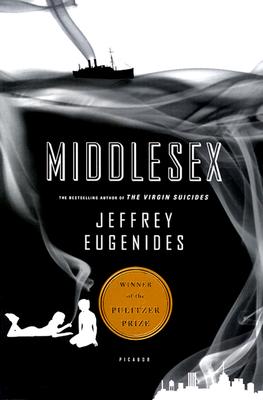
Middlesex--Jeffrey Eugenides


I read Eugenides' first novel The Virgin Suicides about a year ago, and was struck by how well written it was. The narration is in first person plural--something you don't see a lot of in current fiction--which had the effect of making me feel included in the story in a way I wouldn't have felt with a more traditional narrative voice. It has been pointed out that the narration acts like a Greek chorus as seen in classical Greek drama.

The Virgin Suicides is almost dreamlike in its telling of the story of five sisters in a strict Catholic family who are driven to kill themselves over a relatively short period of time. The narrator is actually the collective voice of all the young men, themselves on the cusp of puberty, who are fascinated by the mystery of all girls, and the glamorous tragedy of these in particular. The novel captures the confusion of adolescence, when young men are attracted to young women, while learning how little they understand them.

I was hoping for something as affecting in Eugenides' Pulitzer Prize winning Middlesex, but I was disappointed. The story hangs on the spine of Calliope Stephanides, a girl raised in Detroit of the 1970, who is discovered to be a hermaphrodite at the age of 14. Many years later, having decided to live as a male, Cal Stephanides narrates the story of how he received the recessive genetic condition that made him neither fully male nor fully female.

The story starts with Cal's grandparents, Desdemona and Lefty Stephanides, a Greek brother and sister who lived in a small village in Turkey while it was occupied by the Greeks. As they realize their attraction to each other--compounded by the absence of other romantic candidates--the Turks retake the country and they have to flee. On board a ship to America, they enact a courtship as if they had only just met, marrying at sea and beginning their new lives as man and wife.

This was the most interesting of the stories--the one where Eugenides most unleashed his ability to imagine other places and times and make them real. The subsequent story of his parents generation--first cousins on top of the illicit parentage of one of them--simply doesn't seem to engage his interest, and if one can say he "skips lightly" over anything in a book this long, one would have to say it about this section.

Cal's troubled girlhood is really unremarkable, which is bizarre given the lengthy set up to her birth. She has her share of childhood experiences and friendship troubles, but her condition escapes notice until she fails to hit puberty. At that point, after close observation by a specialist, the recommendation is made to surgically conform her body to her gender identification--female. Cal, however, has been lying to the doctor about how she truly feels about topics of sexuality and attraction, and so s/he declares himself to be a boy and runs away.

At this point, I lost my patience with the story. Mind you, I had read about seven thousand pages by now, all of which seemed to be foreshadowing things that simply weren't happening. And after that point, it got silly. Cal found his way to San Francisco where he performed in a hermaphroditic strip club. The local priest tried to extort money from Cal's parents, and Cal's father died in a high speed chase across the Canadian border. Eventually, I just put the sucker down.

What I loved about The Virgin Suicides was the amazing way he demonstrated the different worlds the boys and girls lived in--the oppressive horror of the girls' restricted lives, and the romantic way the boys perceived those lives. I had hoped for Middlesex to take that contrast one step closer, showing how the boy/girl experienced the differences of living with those different gender identities. Instead, when I got to mutual declarations of hermaphroditic free love in San Francisco, I found myself in a different book than the one I had wanted to read.

I started this post in March of 2006, and only finished it in October of the same year. And in the intervening 7 months, I have had no desire to go back and finish this one. Guess I'll cross it off my To Be Read list.

Thursday, March 02, 2006

Amerika, by Franz Kafka


Okay, time to be pretentious.

Mr. Sweetie and I had a date last weekend--both of the kidlets were off at slumber parties, so we did something grown up and date like--we went to a play.

The Emmy winning regional theater was performing their adaptation of Amerika--a work I knew nothing about. I had read several Kafka short stories, and the play had received a number of positive reviews, so we went.

Well--I didn't understand much, and found myself enjoying it less and less. Sure, Kafka is bleak and depressing, but the reviews had promised it would be funny! But it wasn't--at least not funny enough to overcome the bleak and depressing parts.

Well, I refuse to be defeated by a mere play! So, I got home and Googled Kafka. More interesting than the analysis of Amerika were the biographical facts. Kafka was the son of a domineering father and (apparently) passive mother, who never truly separated from his parents. While he took a law degree and began his career, by his mid-40s he had contracted tuberculosis which forced him to retire and to make do on money her received from his parents.

In the light of this, Kafka's writings make much more sense to me. Amerika is a surrealistic story about a young boy sent packing from his home after he was seduced by a much older housemaid. He is sent to Amerika, a place that Kafka never went--and despite making every effort, he is systematically misunderstood, abandoned, stripped of his possessions and clothing. After each episode, he is left with less than he started with, and his spiral is inexorably downward.

I have not had much exposure to people from abusive backgrounds, but what little I have has convinced me that Kafka's work is a working out of his relationship with his father--trying to do the right thing, yet always, inevitably, being wrong. Kafka's characters seek validation and acknowledgement from authorities who refuse to be placated. Each attempt to win love and support from an abusive parent leaves the child with fewer emotional resources and binds him closer to the parent.

Kafka's work resonates for me with this theme. In The Trial, Josef K is arrested and put on trial, but he never is able to understand what it is he did. The charges are never explained, only punishment is meted out. In Metamorphsis, Gregor Samsa awakes to find himself a cockroach. The transformation is never explained, only the consequences. He is locked into his room, disowned by his family. Eventually Gregor's father is so disgusted by this giant cockroach that he throws an apple core, which lands on the insect's back. Gregor has no way to remove it, and no one will come to his aid. Eventually--through no fault of his own, the apple rots and poisons him, so he dies.

Such lonliness--such isolation! Kafka wrote most of his works before World War I, and he died before World War II, but somehow I associated his writings with the paranoia of Stalinist communism. Certainly, The Trial smacks of the show trials and disappearances of mid-20th century Eastern Europe. But I think that puts too much political significance to something that is more easily understood as a response to Kafka's personal life. As the child of a domineering father, Kafka struggled with the injustice of being punished for crimes that he had not committed, but was unable to defend himself.

I am certain that there are many sophisticated analyses of Kafka as a political writer, and I don't wish to seem ignorant of those aspects. However, for me, the political aspects of Kafka come out of the personal, and I find myself a more sympathetic audience for his works as a result.

Monday, February 13, 2006

The Hours--Michael Cunningham


I loved this book when I read it three years ago. Yes, it was three years ago--I found the grocery store receipt I was using as a book mark. Trust me, it was three years ago.

I loved this movie when I saw it. Really great performances by a well chosen cast. Julianne Moore was better in this movie than in Far From Heaven.

So, when my RL bookclub chose this for our February book--I didn't want to re-read it. It's really a good book, and worth discovering, but I wasn't sure I wanted to re-read it.

Because, as I remembered it, it was so depressing. Just so unhappy.

Admittedly, I read it in a time where I was coming out of some seriously painful depression. I was finally gaining some traction on happiness, but was still dealing with a lot of the pain that depression causes--in me, and in those around me. One of the things one deals with in depression, is the sense that if one was just good enough, strong enough, had just enough will power, it would just go away. The phrase "by the bootstraps" is one that applies--shouldn't you just be able to think your way out of it? Just suck it up and keep moving.

Of course, that's not how it works--or at least it didn't work that way for me. It took too many years of inadequate medication before I finally got the right combination, and started to recover my personality. So, the book had a lot of resonance with me. Laura Brown, the bookworm trapped in the housewife role of suburban L.A., with the small child she felt so inadequate to raise--I had a great deal of sympathy for that situation. How do you get through all those hours? Hours and hours until--what? It doesn't get better, but at least you get to read, or sleep, or something to ease the pain of all those hours.

Virginia Woolf, as imagined by Michael Cunningham, was also familiar. There is always the fear that the madness is returning. There is one powerful moment in the book when she stops still, feeling the headache coming on. There is that horrifying moment--is this it?--but no, it is not the headache. The madness is at bay.

Really, when you read The Hours, you don't question why Woolf killed herself, bu how she managed to wait eighteen years after Mrs. Dalloway before she did. Poor Laura Brown--she lasted another five years before she left, and hellish years they must have been. Not that anyone was a fault--there was nothing wrong with the people around these women, but brain chemistry is tremendously determinative.

At book discussion, one of my dear and lovely friends just couldn't bear Laura Brown. As with other books we have read where the mother tries to flee her job in the family, my dear dear friend just had no patience. "Once you are a mother, you just don't have the luxury of staying in bed and reading. Those kids are there and they need you, and you just have to suck it up, lady, and do what you need to do!"

I must say that my friend is a wonderful mother, and her kids are in high school or college, and she is seeing the light at the end of the tunnel, perhaps. Or, more likely, she is just too mentally healthy to fathom what depression is like. And good for her! But the need to escape is not just a luxury, or failure of will power. It is painful to stay, and painful to flee. Leaving behind your children is like gnawing your own leg off, but it was something Laura had to do or else she would have died. Attempted suicide was not a response to a bad day, and leaving her family was not done on a whim, but was the only alternative she could see. And I felt that deeply three years ago.

But I did re-read it, and found more hope and joy than I had remembered. Plus the writing--lordy, the writing! Precisely observed emotional states, conveyed moment by moment--the literary innovation Woolf achieved pushed beyond what she had been able to achieve. Because Cunningham's book doesn't just transpose Mrs. Dalloway to modern America, but it expands on the story, by exploring the differing responses the story makes on the writer, the reader, and the one who simply lives the life. Cunningham also places common elements in each story, but makes them fundamentally different so the connections resonate subconsciously.

For example, the yellow roses. Most obviously, Laura Brown makes yellow frosting roses for her husband's birthday cake. Virginia Woolf provides yellow roses for the bird funeral her niece and nephews hold. Clarissa's partner Sally buys yellow roses as a gift to Clarissa. All are disappointing in various ways. Laura put the roses on first, then tried to write between them with frosting, and felt she should have done it the other way around. Virginia's niece placed the roses around the bier and then laid the thrush inside the ring, and Virginia felt it should have been done the other way around.

It's a wonderful piece of writing, and Michael Cunningham was justly praised for that book.

One last note: my lovely and healthy friend provided our dessert that night--a cake with yellow frosting roses and "Happy Birthday Dan" on it.

Welcome To My Evil Book Blog!

I read.

I read a lot.

A lot a lot.

So much that I forget what I have read and what I thought about it.

This is where I will post my current books, my reviews, and anything else bookish that catches my fancy.

I promise I will title each post with the title of the book, for easy reference.

Thanks! I'm here all week! And tip your waiter!